

the wand chooses the wizard
the right thing finds you first

dear friends,
the first time i sat behind a drum kit, i didn't notice. the sound was too much and my hands were too busy fumbling to create some semblance of music that wasn't muscle memory yet, to register what was happening in my own palms.
the low-grade constant hedging of the body and this very apologetic way of occupying space i’d been carrying so long i’d mistaken it for a personality trait — stopped. just like that. the sticks in my hands and the hands suddenly and completely sure of themselves, and i remember, sitting at a slight remove from all of it post the session, thinking, “so this is what that feels like”.
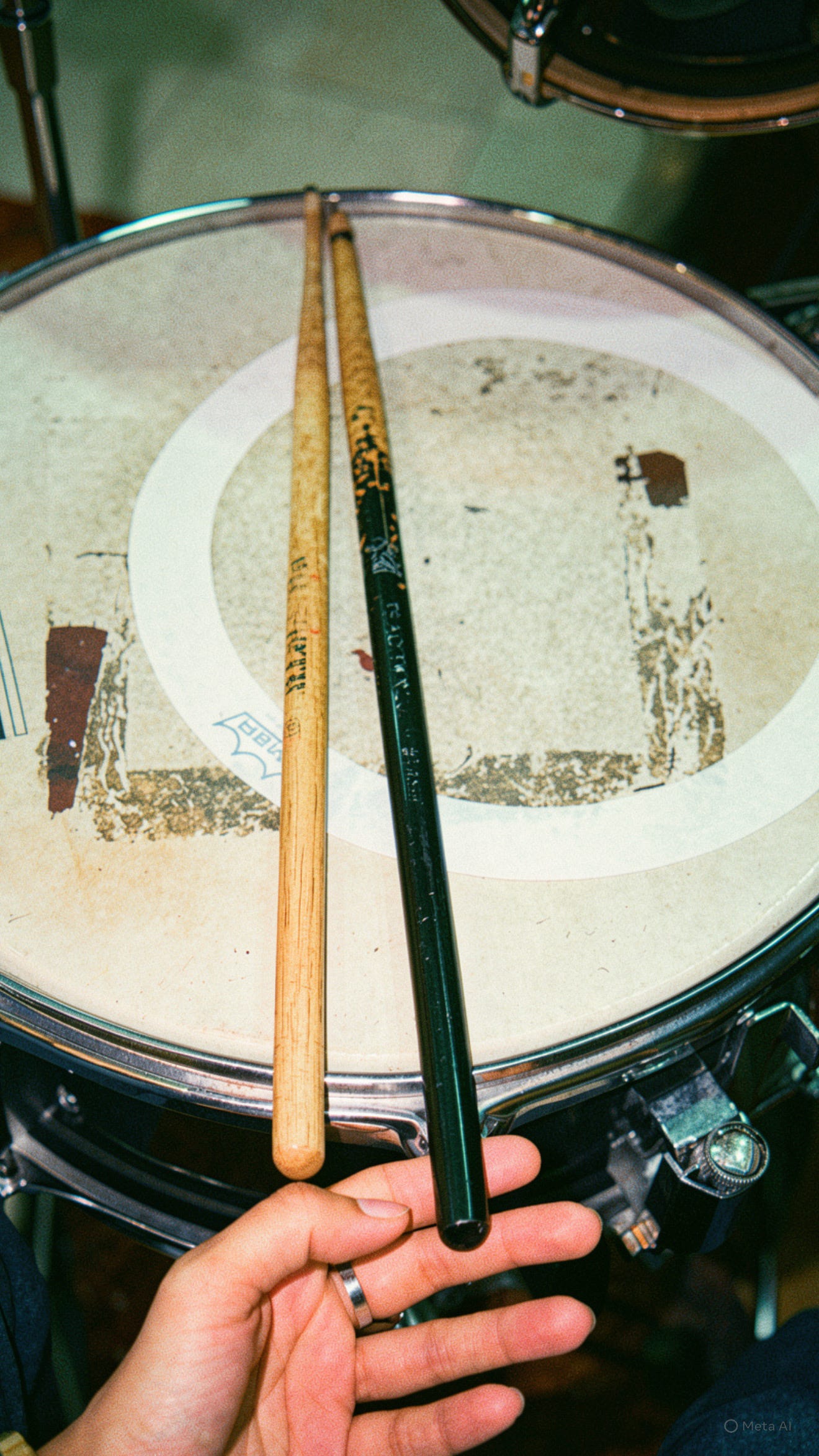
the wand chooses the wizard. in the wizarding world… and yes, i am going there, bear with me, the child walks into the shop full of intent and preference and all their carefully rehearsed ideas about who they are, and the wand looks at all of that and decides something different. the wand knows a thing about you that you have not yet been told.
what it means in practice, i’ve come to realise is that the innate ‘youness’ in you exists before your understanding of it. a frequency you are already emitting. and the right instrument or room or person, hell, even the right city — recognizes it and responds.
i was the last to know about the drums. this seems to be a pattern with me and the things that matter most.
before all of this, there was a piano.
i started young enough that i cannot tell you when it began, only that it was always there, the way some experiences have simply been conditions of my childhood rather than events inside it. the music room at school was where i became, for the first time and in a way i would spend the next decade trying to replicate, entirely present. not performing presence, not assembling the appearance of a perfect child for the benefit of the adults in the room. actually, completely, embarrassingly there.
my brain is not, by its nature, a room that stays still. it never has been. i know this now with the clarity of a diagnosis and i sort of knew it then with the helpless confusion of a child who could not understand why the inside of her head felt like several conversations happening simultaneously in a space designed for one.
the inside of my head was never empty which is its own problem entirely. there was always a book i was halfway through and a debate argument i was quietly constructing and a sprint interval my legs were already planning and four other things besides, all of them alive and demanding and refusing to wait their turn. the world wanted me to sit still and attend to one thing at a time and i had approximately seventeen things that felt equally urgent and real and worth the full force of my attention. in retropsect, the exhausting daily work was the performance of a child whose attention needed to be only at one place, for the benefit of every adult in the room who needed to believe that focus looked the way they thought it looked. i was good at it. the hiding became its own curriculum and i was a good student.
what they do not tell you because the story about adhd is always a story about deficit — is that the same wiring responsible for the noise is also responsible for the hyperfocus. the pattern recognition that arrives so fast it bypasses the usual checkpoints. the ability to walk into a new room, context, new body of information, and absorb it whole, make connections between things that have no obvious business being connected, hold multiple threads simultaneously and find, at the intersection of all of them, something that the more linear mind would have taken considerably longer to reach. the adhd brain is not a broken version of the neurotypical one. it is a different beast entirely, capable of things the “standard” model is not, provided it is given the right stimulus.
the music room was the right stimulus. i just did not have the language for why.
and then i sat down at the piano and the noise stopped.
not gradually, too. my hands on the keys and my brain, for the first and for a long time the only time, with somewhere precise to put itself. the music demanded all of me and in demanding all of me it resolved the problem of there being too much of me for one place to hold. i was not distracted at the piano. i was not performing focus. i was simply in it, the way you are in water, surrounded and held and asked by the medium itself to move differently.
the recitals were the best days of my life. i know the expected qualifier is the acknowledgement that i was young and have lived more since. but, standing in front of people and producing something, making sound arrive in a room that had not contained it before, giving people something to feel that they had not come in carrying — nothing i have done since has felt more essentially like what i am for. creation as its most honest. not yet complicated by industry or audience or the question of whether the thing i am making will find its people. just the music and the room and my hands and the evidence, irrefutable and warm, that i had made something real.
i was a maker before i was anything else. before i understood that writing could be a life or that the way i saw things was not simply an ordinary vision but a clear and arguable slant — before all of that — i was someone who sat in a music room and produced things from nothing.
then life reorganised itself without consulting me, and the music room receded. the piano became something i had done rather than something i was doing. and the making, the texture of aliveness that making produced in me, went somewhere i could not immediately find.
what i did not understand then, and understand now with a clarity that has a cost to arrive at, is that what the piano had been doing for my brain was not incidental to the joy of it.
the conditions under which my brain operates at full capacity are not, as it turns out, mysterious. i have known them my whole life. i simply lacked the framework to understand that what i was experiencing in the music room was not a gift that belonged only to music but a set of conditions that the music was creating — total sensory engagement, immediate feedback, pattern and variation in a ratio that keeps the brain exactly calibrated between boredom and overwhelm, which is not just pleasurable but kind of regulatory. and for a brain like mine, something closer to necessary.
the piano gave me all of this. when it went, i lost all of it. and i spent a very long time not knowing what i had lost, only that something was harder than it used to be, that the noise inside had gotten louder, that the strategies i was using to manage the daily work of being a person inside my own head were effortful in a way they hadn’t always been. i wrote. writing gave me pieces of it, the absorption, the making and yes, the satisfaction of a sentence that lands correctly. but writing is slow and the feedback is delayed and there is no rhythm in it the body can feel from the outside. it was not enough.
and then the drums.
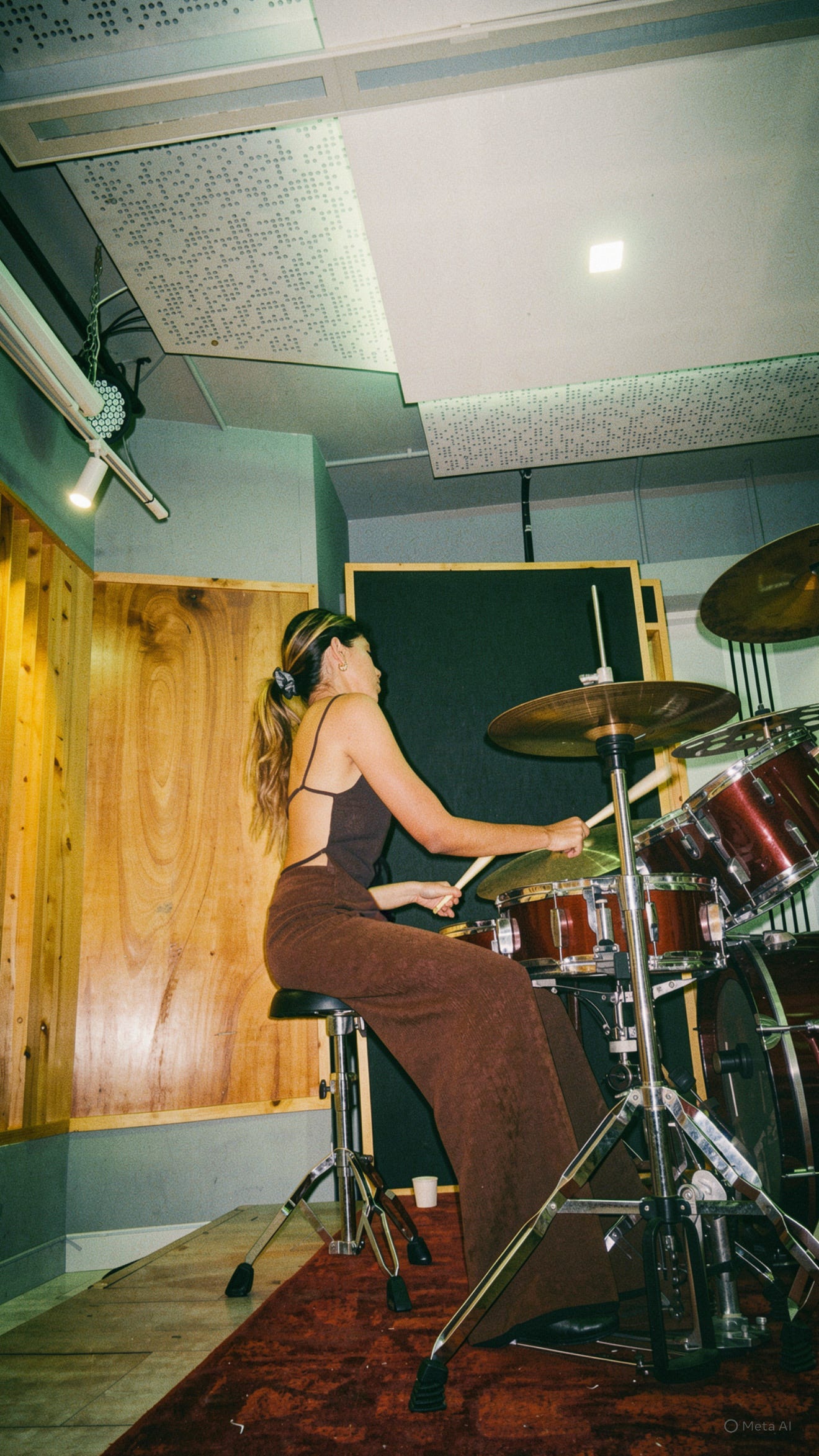
here is what the drums do that i cannot adequately explain without sounding like someone who has found religion, which perhaps i have.
the drum kit requires your whole body and your whole mind simultaneously and in relationship to each other, which means there is genuinely no space for anything else. this is not leading to a weird metaphor about mindfulness or presence in the aspirational, scented-candle sense of those words. very mechanically, you are doing four independent things at once with four independent limbs and they are all in service of a single rhythm and the moment your attention migrates even fractionally, the whole thing falls apart and you know it immediately because you can hear it. the feedback is instant. the consequence is audible. for a brain that struggles to sustain engagement without immediate and sufficient return, it is a solution. the kit itself enforces the focus by making the cost of losing it impossible to ignore.
what nobody mentions about rhythm specifically — and i find this omission almost criminal — is what it does to the adhd brain beyond the regulation. rhythm is pattern made physical. it is information arriving in a form the body can process before the conscious mind has to do anything with it, which means the brain that usually spends its energy managing the gap between stimulus and response gets to skip that step entirely. the pattern is already inside you. the body already knows where the beat goes. and in that knowing, in that moment of the brain and the body being in agreement without negotiation, is where you strike gold. i have had insights behind a kit that i could not have manufactured at a desk; thinking that rhythm unlocks is not the slow careful thinking of someone building an argument brick by brick but the faster, more associative thinking of someone who has been given permission to move at their actual speed. it is, in the most literal sense, a sharpening.
i had forgotten what it felt like to be in my body and in my mind at the same time and finding them in agreement with each other. the piano used to do this. i had almost forgotten that it did, until the drums gave it back to me like a face from a photograph you haven’t looked at in years.
i am a better thinker after i play. the work come easier, the arguments arrive with more of their structure already intact, the quality of attention i can bring to a page is higher. i used to attribute the good days to luck or sleep or the angle of the light peering into my room. i know now what it actually is. drums regulate me for hours afterward, the way running always does too but more musical, more mine.
there is a version of this piece that is only about the drums and what they have given back.
but the fuller truth is that what i am really talking about is the difference between consuming and creating, and what it does to a person to spend too long on the wrong side of that line.
we are in a cultural moment that has perfected the architecture of consumption. the feed and the algorithm that has learned your frequency with an accuracy that should disturb us all more than it does. it is frictionless and it is total and it will take all the time you give it without ever giving anything back except the sensation, briefly, of having been stimulated. i am not exempt from this. i have lost hours i am not proud of to it. there is a depletion that comes from consuming without making to me, a flatness that accumulates quietly until it is not quiet at all.
the music room never felt like that. the piano never felt like that. and the drums, now, never feel like that. i leave the kit spent in the best possible way, the way you are spent after you have given something rather than simply taken.
the drum is also a political instrument.
every culture that was ever colonised had its drums confiscated early; the colonial project understood that sound is power, rhythm is how people stay coherent, stay connected across generations and distances and deliberate erasure. take the drums and you take the memory. take the memory and the work of fragmentation becomes so much easier. there is the question of whose hands are permitted to hold the sticks at all. tony allen reinvented what rhythm is allowed to be and is still, in many rooms, an afterthought in conversations that would not exist without him. questlove has built an entire intellectual and critical practice on the foundation of percussion and still has to make the case, repeatedly, in spaces that should require no such argument, that the drummer is a thinker. that the person holding the rhythm is not the support act for the real musicians but is, in fact, where the music lives or dies.
and then there is the smaller version of this same argument, which is, who is handed an instrument and told to “go and become themselves”, and who is handed a syllabus instead. the rooms where that permission is given are not distributed evenly. the girl gets the flute, the piano, something that sits still and makes no mess, does not take up more space than it is supposed to and mostly does not announce itself. sheila e. is one of the finest musicians of the twentieth century and spent the better part of her career being discussed primarily in relation to the men she worked with, as though the drumming itself was secondary to the biographical footnote of who had handed her the opportunity
the drums announce themselves. they do not permit ambiguity about whether you are present. you are here or you are not, and if you are here everyone in the building knows it.
i spent a long time being the kind of smart that took up very little space. the drums are where that project ends. behind the percussions i am not legible or convenient or managing anyone’s comfort. i am just exactly as loud as the music requires.
i am still, in every session, finding out what that means. i am still, in every session, that child in the music room who has just discovered that the inside of her head can be quiet, that all the noise can be organised into something with shape and intention and feeling, that she is not too much for the room she is in but enough for it.
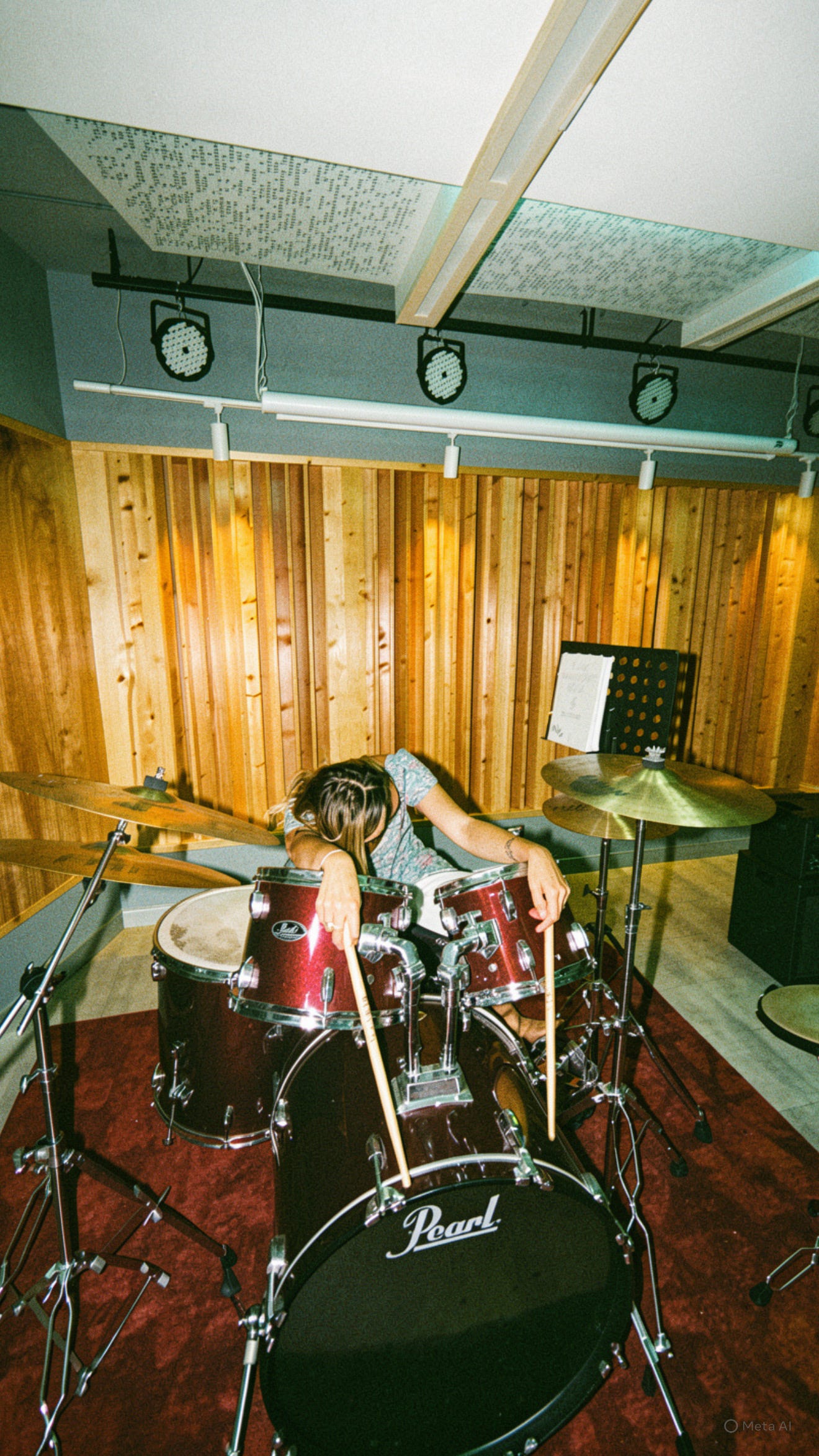

present company -
currently on my desk: a couple of pain & inflammation meds that are together functioning as a very unwelcome reminder that i cannot sit behind the kit for another month minimum. resting the left foot after injury and no bass drum. (my intrusive thoughts might take me back sooner)
also on the desk: a heavily annotated copy of count of monte cristo that i have complicated feelings about and cannot stop reading, a not-so-heavily annotated copy of gone with the wind, cain’s jawbone - the dastardly crossword book that was nearly destroyed by my hands this afternoon because it is diabolical, and a kodak 35mm film camera (my fifth child now) that a very dear friend passed down to me before she moves out of the neighbourhood. some things you want to hold before you use them.
what is on the rotation while the foot heals and the kit sits there judging me: tony allen, afro beat 2000 / sheila e., a love bizarre / d’angelo, africa / questlove’s voodoo anniversary mix, which is doing a reasonable job of making me feel like i am playing when i am not.

P.S. If you found meaning in these words, please consider sharing with others who might like it. This space thrives on curiosity and connection.
this was beyond beautiful to read. spectacular shit.