

no skips allowed
an album a day keeps the playlist away

writing everyday has led me to places i wouldn’t go with a gun.
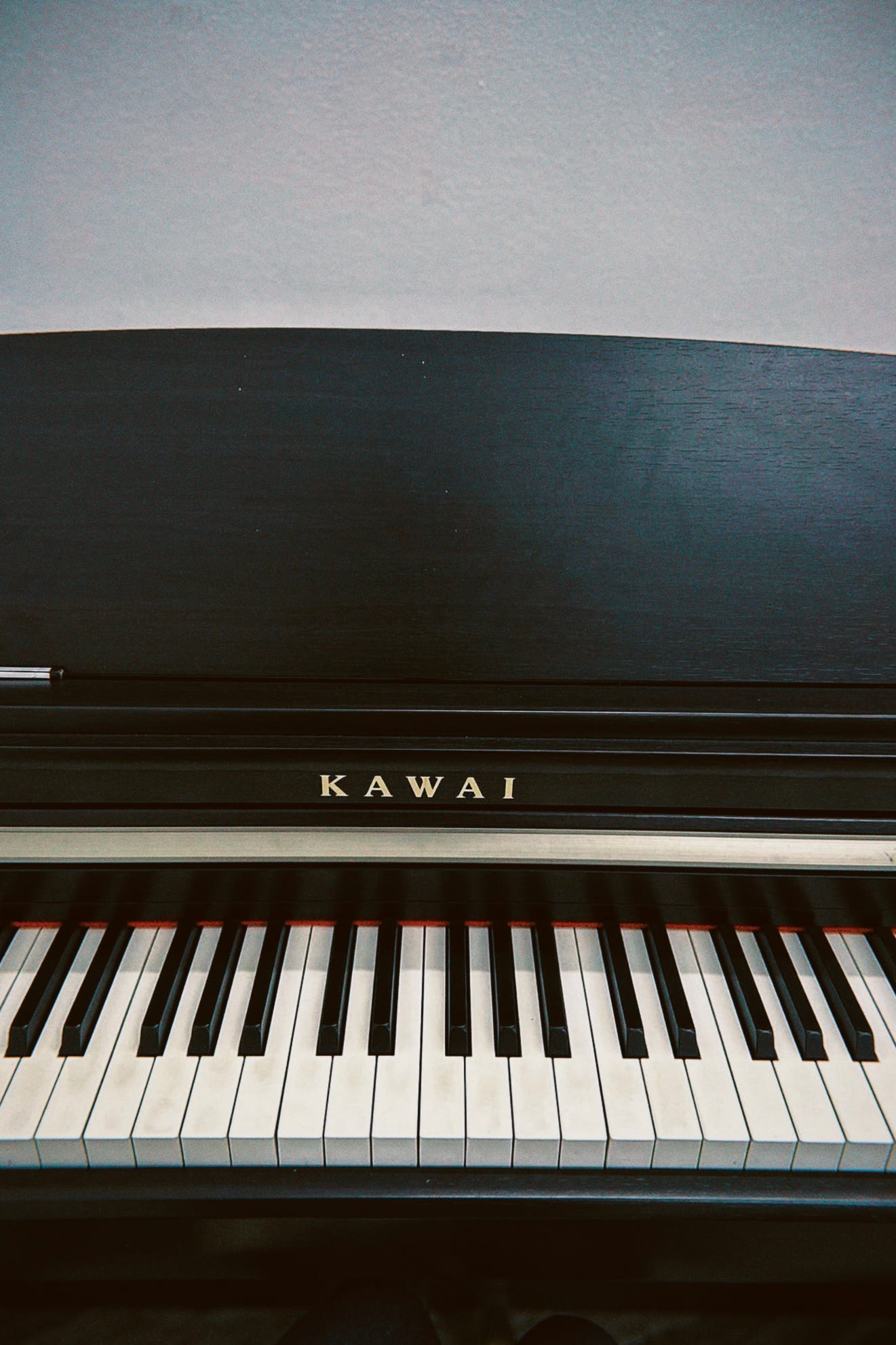
i sat down this morning to finish my mandated writing for the 75 hard challenge, this time for substack again, before i head out for the fine sunday ahead of me.
and found myself spending approximately forty minutes trying to write an essay about whether the cultural rehabilitation of the man bun is a symptom of the same post-irony condition that gave us normcore — and i am not joking, i have three paragraphs. the world does not award me with nearly enough credit for not putting my thoughts out into it. i will be adding restraint as a skill on linkedin.
so now i’m just going to write down a list and bolt out the door for my dinner date. should be easy enough since i love lists. my notes app is essentially one continuous list interrupted occasionally by a paragraph. they make my world go round.
one of the other goals i set for myself at the start of this 75 day exercise along with the daily draft and the obvious bodily restrictions was to listen to at least one full album or soundtrack end to end. something i'd been meaning to get to or hadn't heard before. the rule is simple - no skips or shuffles. the whole thing, in sequence, the way someone assembled it to be heard.
it has been five days. here is what the five days sounded like.
day one was illinois by sufjan stevens, 2005, asthmatic kitty records, an album i have owned in some form or another for fifteen years and have never actually heard end to end, which is the thing about beloved records — you absorb the famous tracks through cultural osmosis and never sit down with the actual object. the album is twenty-two tracks long and is the second installment of a project sufjan eventually abandoned, where he was going to make an album for every state in the united states. it is a baroque pop album with the orchestral ambition of an early twentieth century song cycle and the emotional architecture of a person who was raised in a strict evangelical household and has not entirely worked out what to do with that.
what struck me listening to it is how much of the album is held together by piano. you think of sufjan as a banjo person, an oboe person, a someone-who-plays-too-many-instruments person, but the piano is the spine. on casimir pulaski day, which is the song about a teenage friend dying of bone cancer, the piano is so simple it is almost embarrassing — a small repeating pattern in the right hand under a left hand that barely moves. i sat down at the piano at the studio after the song ended and learned the pattern in about ninety seconds. ninety seconds. and the song destroys me every time. the pattern is so simple it cannot lie. you cannot dress up a six-note loop. you cannot hide behind technique.
the drumming on illinois is almost not there. there is a brushed snare here, a soft mallet on a tom there, hand percussion, bell tree, but the album resists rock drumming entirely. the closest it gets is on the predatory wasp of the palisades is out to get us, where a kit pulse comes in toward the end, but even there it is what jazz players call timekeeping rather than playing. as a drummer, sitting through an album that does not require a drummer is a useful reminder that drumming is not a moral good. some songs do not want drums. illinois is largely an album of songs that do not want drums, and sufjan, who arranged everything himself, knows this and respects it. come on! feel the illinoise! has its opening section in five-four time, which i did not consciously notice the first dozen times i had heard the song through cultural osmosis. five-four. nobody bothered to mention that one of the most beloved indie songs of the 2000s is built on a time signature most listeners cannot identify, because critics talk about the orchestration and the lyrics and the religious anxiety and never mention the meter.
day two was the soundtrack to haider, vishal bhardwaj, 2014, his adaptation of hamlet set in kashmir and the third of his three shakespeare films after maqbool and omkara. bhardwaj is a film director who is also a serious composer. he writes his own scores, the music in his films is never a separate department from the writing. the haider soundtrack is the densest of the three and the one most committed to its place, which in this case is kashmir, with all of the sufiyana mausiqi and kashmiri folk forms that belong there.
the centrepiece is bismil, sukhwinder singh’s voice over a percussion arrangement that is essentially a retelling of hamlet’s play-within-a-play as a dance number. the percussion is what i kept rewinding. there is dhol, there is dholak, there is what i am fairly sure is a duff, and they are layered into a polyrhythm that you can hear breathing if you put headphones on and stop trying to understand the lyrics. as a drummer the thing that fascinated me is that the polyrhythm is not symmetric. the dhol is doing it’s bit, the dholak is doing a related but offset bit, and the duff is filling the space between them.
i went looking for whether anyone had written about the drumming on bismil specifically, and what i found was a lot of writing about gulzar’s lyrics, a fair amount about sukhwinder’s vocal performance, and almost nothing about the percussion. this is the standard problem in film music criticism in india and not only in india. nobody writes about the rhythm section. the rhythm section is the entire engine of the song and it gets passed over because the conventions of music writing are wired toward melody and lyric, and percussion does not melt into a quotable phrase the way a lyric does.
aao na, on the same album, is more pianistic. the piano in hindi film music is usually colour rather than structure — you bring it in for a particular emotional register, soft, european, somewhat aching — and aao na uses piano exactly this way. it is not what i would call piano writing. it is piano deployment.
day three was the self-titled ray charles record on atlantic, 1957, compiled from singles he recorded across the previous five years in sessions ahmet ertegun put together when he realised he had something rare on his hands. it is the album with i got a woman on it. i got a woman is one of those songs that everyone has heard without knowing they have heard it, because elvis recorded it, kanye sampled it on gold digger. mostly because it is one of the founding documents of soul music.
what ray is doing on the piano on i got a woman is taking a gospel song and stripping the religious language out and putting a woman in its place, which got him in tremendous trouble with the gospel community at the time. the piano playing itself is the gospel piano he had grown up with — the call and response, the chord voicings in the right hand that are basically a one-man choir, the way the left hand walks through the bass line without ever being a bass line. as a pianist who grew up doing rote western classical training, i can tell you this kind of playing is fundamentally not what western classical training teaches you to do. western classical piano training teaches you to read a score and execute. gospel piano teaches you to listen to a singer and reply. ray’s playing on this album feels like conversation. i could practise for thirty years and not produce a left hand like that.
mess around, written by ahmet ertegun under the pseudonym a. nugetre, is the one that should be required listening for anybody learning blues piano. it is what jazz pianists call a boogie pattern in the left hand under a right hand that is essentially imitating a horn section. you can hear the entire history of new orleans piano in two minutes and forty seconds. fats domino comes out of this. dr john comes out of this. half of the british invasion piano playing comes out of this. ray was twenty-two when he recorded it.
day four was the soundtrack to little shop of horrors, the 1986 frank oz film, music by alan menken, lyrics by howard ashman. this is before menken and ashman became the menken and ashman of the disney renaissance — before the little mermaid, before beauty and the beast, before aladdin. little shop is where they figured out their sound.
what they were doing, musically, was a remarkably precise pastiche of late fifties and early sixties girl group pop and doo wop, filtered through a broadway sensibility. the three urchins function as a greek chorus and a motown backing trio at the same time. skid row (downtown), which is the show’s opener, is the song i kept replaying. the bass line is essentially a doo wop bass line, the harmony stack on the urchins is straight out of the shirelles, but the chord changes underneath are doing their part like doo wop never did — there are passing diminished chords, key changes inside verses. there is a kind of broadway-trained harmonic sophistication smuggled inside what sounds like a simple pop song. menken is one of the great chord-change writers of the late twentieth century.
drumming-wise the soundtrack is fascinating because the drumming is doing two jobs at once. it has to be the rock and roll backbeat the pastiche requires, and it has to support the dialogue and stage business that broadway drumming has to support, which means hitting marks. the session drummer on the recording is doing both at once, which is genuinely hard. broadway drumming is a separate discipline from rock drumming and the people who can do both are crazy (good). you can hear the discipline most clearly on dentist!, where the kit is essentially a comedy instrument — the fills are punctuation for steve martin’s vocal performance.
suddenly seymour gets all the attention because ellen greene’s vocal performance is one of the great vocal performances in the musical theatre canon of the twentieth century, and i will not argue with this. but the song that does the most musical work is skid row. the romantic duet is the album’s emotional peak. the chorus is the album’s architecture.
day five (today) was sound of silver, lcd soundsystem, 2007, dfa records, which is the album i have probably listened to more times than any other on this list and yet, again, never end to end without skipping somewhere.
the drumming. i have to talk about the drumming. pat mahoney is the drummer in lcd soundsystem and he is one of the most important drummers of his generation. can you tell i have a thing for him? because i do. on all my friends — which is the song everyone knows, the seven-and-a-half-minute build that starts with a single piano figure repeating and accumulates instruments and voices until the song is almost crying — mahoney plays a single hi-hat pattern for the entire seven minutes. the hi-hat does not vary. the snare comes in late and stays inside the pattern. the kick drum does not break. for seven and a half minutes the drummer plays the same rudiment and the song does not get bored because around him everything else changes. this is the hardest feat for a drummer.
mahoney’s drumming on this record, according to the critics and the consensus is that he is tryng to mimic something close to what jazz drummers like paul motian or jim keltner did, which is play the song rather than play the kit. mahoney studied jazz before he joined lcd soundsystem and the discipline of jazz timekeeping is what makes the all my friends hi-hat pattern bearable. a drummer with rock training would have got bored at minute two and added a fill. mahoney does not add the fill.
someone great, the song about james murphy’s therapist dying, is built on a drum machine rather than a live kit, and it is interesting that the album moves between live drums and programmed drums depending on the emotional register. the live drums get the songs about being alive. the drum machine gets the songs about loss.
new york, i love you but you’re bringing me down is the piano song. it is a slow-build piano ballad that turns into an explosion in its last minute, and the piano writing is straightforwardly indebted to early-seventies john lennon piano ballads. murphy has said this in interviews. it is not subtle and it is not trying to be.

i tagged each of the five albums by genre as i was writing this, because not only am i a list nerd but also a data nerd. (no one in the audience is shocked)
across five albums the genre tags included - indie folk, baroque pop, chamber pop, hindustani classical, kashmiri sufi, hindi film music, rhythm and blues, soul, gospel, jump blues, musical theatre, doo wop, dance punk, electronic, indie rock. fifteen genres in five days, which is, if you do the math, three genres a day.
this is what being a large nerd with what we will charitably call attention regulation challenges looks like, attempting to fix the attention by adding another structure to my life, which is the most adhd intervention for adhd that has ever been devised.
five days in, i can sit through a whole album without wanting to draw a correlation to another album that leads me to jumping into another artist’s work. this is not impressive. it is what my ten-year-old self did on every train or plane journey she ever took without thinking of it as a discipline.
tomorrow’s album is going to be aja by steely dan. perhaps. i will let you know in a week.
P.S. If you found meaning in these words, please consider sharing with others who might like it. This space thrives on curiosity and connection.
i'll become a fan at this rate xD great read!